Marketing Systems Engineering: Why Effort Doesn’t Guarantee Growth

When more effort stops producing better results

Most marketing doesn’t fail because it’s executed poorly. In high-growth environments, marketing failures are rarely due to poor execution. More often than not, they are a symptom of structural fragmentation.

Why? Most organizations treat marketing as a series of isolated events—campaigns, channel launches, and creative bursts. In these organizations, marketing begins with action. Campaigns are launched, channels are selected, budgets are assigned, and timelines are set. There is movement, activity, and output. From the outside, activity looks like progress, and for a period of time, it often is.

Traffic increases. Leads come in. Revenue grows. The system appears to be functional… until the “Complexity Ceiling” is hit. Enough results are generated to justify continued investment, and enough activity exists to suggest that things are moving in the right direction. That perception tends to hold until something changes.

Growth slows. Performance becomes inconsistent. Results stop scaling in proportion to effort, and what once felt manageable becomes difficult to explain. In short, the system becomes heavier, but loses its effectiveness. When this happens, most owners default to the following: more ad spend, more content, more tools. While this impulse to add more is common, it’s important to understand that:

In short, the system becomes heavier, but loses its effectiveness. When this happens, most owners default to the following: more ad spend, more content, more tools. While this impulse to add more is common, it’s important to understand that:

More marketing doesn’t fix a broken system. It exposes it.” — Jordan Woolf, Principal / Co-Founder

Even though these moments feel like a lack of effort, what’s actually occurring is a lack of structure. When the relationship between an activity and performance breaks down, performance becomes inconsistent, and it’s hard to identify the most important parts of your marketing mix.

Marketing isn’t a series of campaigns. It’s a system that produces revenue.” — Hitakshi Shah, Assistant Manager, Advertising Department

Applying Systems Engineering to the Marketing Funnel

“When a production line fails, engineers don’t add more material. They fix the system.” — Tyler Fawcett, Sr SEO Specialist

The Production Line Blueprint

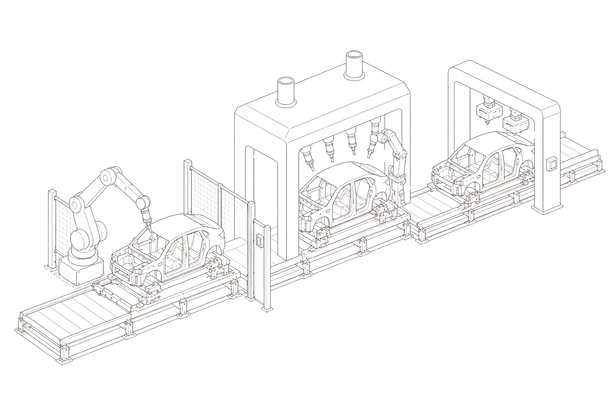
If you were responsible for a vehicle assembly line producing hundreds of cars each day, your focus wouldn’t be on isolated tasks. Instead of viewing welding, painting, or final assembly as independent tasks, you would view the entire line as a system. Each stage depends on the one before it. If one part slows down, everything behind it begins to stack up. If one part underperforms, the entire system’s output is affected.

Now, imagine output starts to decline. Cars are still coming off the line, but not at the expected rate. You wouldn’t respond by simply pushing more materials into the system or asking workers to move faster– after all, that would only create more pressure and amplify the problem.

Instead, you would step back and analyze the system to map how each stage connects, identify where the constraint exists, and determine what is preventing consistent output. This isn’t as different from marketing as you might think:

  • The Raw Material: Target Audience/Traffic.
  • The Refinement: Lead Nurturing & Qualification.
  • The Finished Product: Customer Acquisition & Revenue.

In a marketing context, if your conversion architecture is flawed, increasing traffic only increases the volume of waste. To achieve predictable revenue, you must move beyond creative output and toward Revenue Operations (RevOps). Improvement doesn’t come from effort alone. It comes from understanding how the system behaves and applying the right changes in the right place.

Why Marketing Systems Become Hard to Optimize

“A system doesn’t break all at once. It fails at its weakest point.” — Kristen Thomas, Sr Content Writer

The Production Line Blueprint

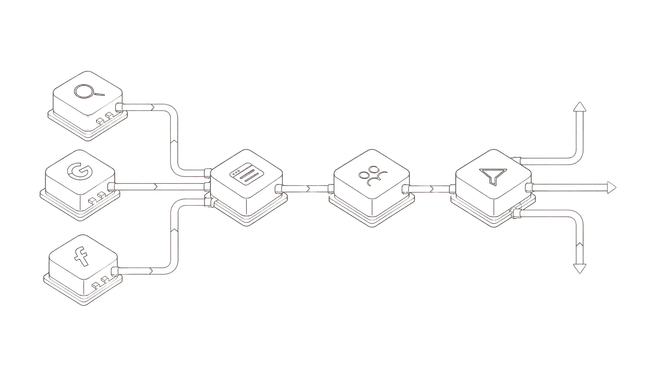
Whether it has been designed intentionally or not, your marketing operates in much the same way. Attention enters the system, moves through various stages, is refined and converted, and ultimately produces revenue. When these stages are aligned, the system feels stable and reliable. When they aren’t, however, things begin to fragment. Even though you see increases in traffic, you won’t see it convert into leads, or if you have leads, they won’t convert to customers. Each stage appears functional on its own, but the system as a whole is underperforming.

The challenge with modern marketing is that systemic failures often disguise themselves as tactical issues. A decline in revenue might look like a “lead quality” problem, but it is often a data feedback loop problem. Without visibility into how the system behaves, it’s difficult to know where the real constraint lies.

As a result, decisions become reactive. This leads to misapplied resources like:

  • The Error: Buying more traffic to fix a low conversion rate.
  • The Engineering Fix: Optimizing the conversion path to lower the Customer Acquisition Cost (CAC).

These actions are not necessarily wrong. They are simply misapplied. Increasing traffic does not fix a conversion breakdown. Driving more sales does not improve outcomes if customer value is not being fully realized.

Without clarity, effort gets applied in the wrong place.” — Seanna Johnson, Sr Project Coordinator

From Guesswork To System Clarity

From Chaotic Activity to Predictive Revenue Architecture

You’re likely already measuring parts of your marketing mix; Campaign performance, lead volume, and revenue are all visible in some form. What’s often harder to see is how those pieces connect. Without that connection, measurement becomes disjointed; there’s no real clarity, to help guide your continued efforts.

What isn’t measured isn’t managed. And what isn’t managed can’t be predicted.” — Jordan Woolf, Principal / Co-Founder

The transition from “doing marketing” to “engineering growth” requires a shift in how you measure performance. When you treat marketing as an integrated circuit, variation decreases and predictability increases. Instead of asking what to do next, the focus shifts to understanding what is preventing the system from producing the outcome you want.

The Benefits of a Systematized Marketing Engine:

  • Predictable Forecasting: Stop guessing next month’s revenue and start calculating it based on system throughput.
  • Operational Alpha: Achieve better results than competitors using the same budget by reducing “leaks” in the funnel.
  • Data-Driven Confidence: Make high-stakes investment decisions based on structural evidence rather than “gut feeling.”
Performance becomes more stable. Patterns begin to emerge. The system starts to behave in a way that can be understood, improved, and repeated. When you structure what you already have, you gain the benefit of consistency and the ability to refine with confidence.

Conclusion: The Goal is Structural Integrity

“When the system becomes clear, decisions become easier.” — Leane Madsen, Assistant Manager, Social Media Department

Most businesses don’t lack talent or effort; they lack a system capable of producing consistent results. In the modern landscape, the winner isn’t the one who works the hardest, but the one with the most efficient machine.

Stop launching campaigns. Start engineering a revenue engine.

The goal isn’t more marketing. It’s a system that produces predictable outcomes — from consistent lead flow and stable conversion rates to reliable revenue growth and confident decision-making.” — Chris Lawson, Principal / Co-Founder